Antennas for LoRa Mesh
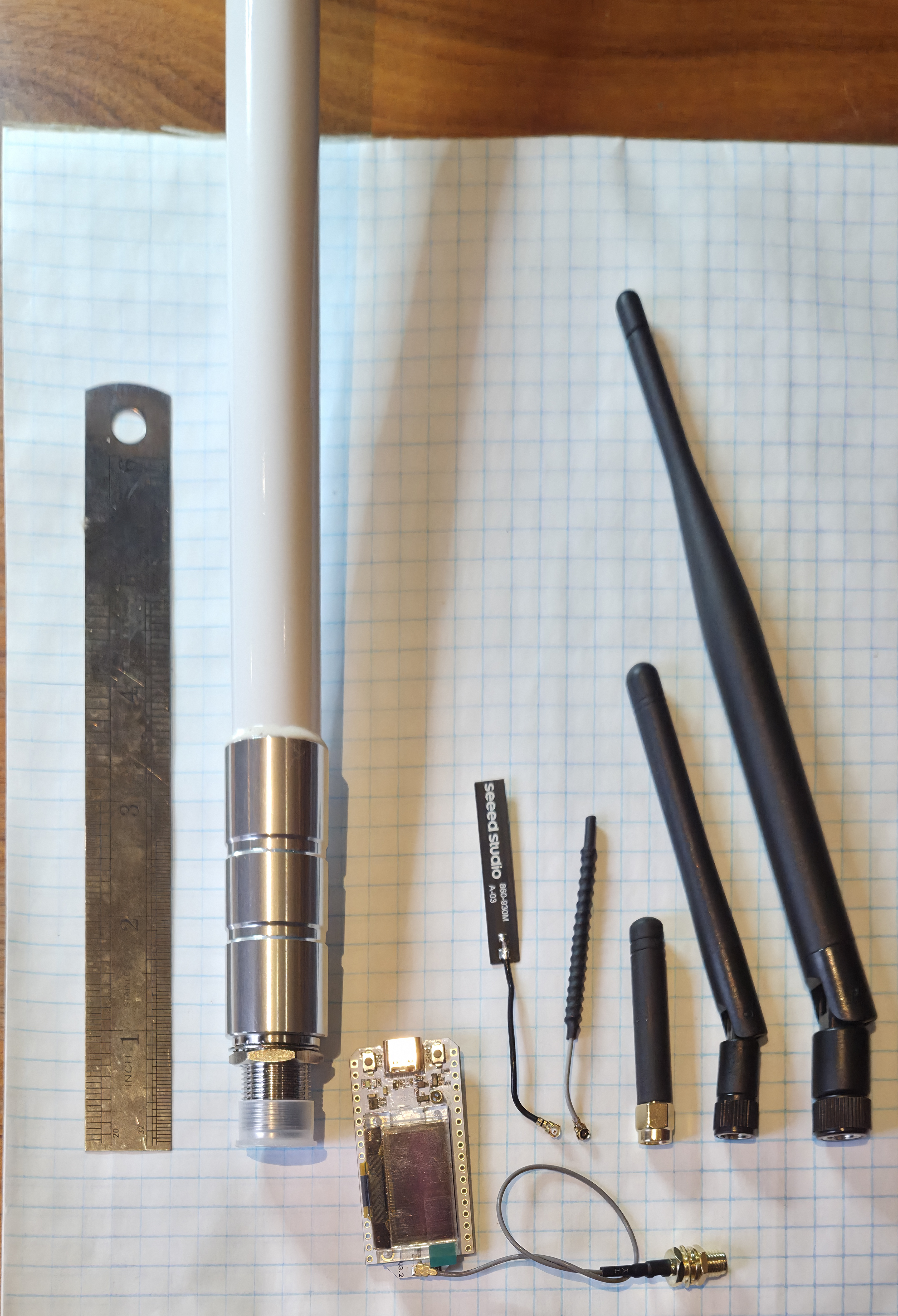
The antenna is the single most impactful upgrade you can make to a LoRa mesh radio. Even a modest step up — from a stock rubber duck to a small fiberglass whip — can double or triple effective range. This guide covers choosing the right antenna for your situation, installing it correctly, and understanding what affects your signal.
Choosing by Use Case
Different deployment styles call for different antennas. Here's a quick breakdown of the most common scenarios:
Portable
📱 Pocket Trackers & Portables
Compact rubber duck or short screw-on whip antennas. Built in or added via SMA connector. They sacrifice range for convenience. Work best near other nodes or a repeater. Any external antenna — even a cheap whip — is an immediate upgrade over the stock rubber duck.
Mobile
🚗 Mobile / Car Mounted
Magnetic-base antennas sit on the car roof, using the metal body as a ground plane. 3–5 dBi models are ideal. Route the coax cable through a door seal or window. Remove before low-clearance structures — a snapped connector is a common casualty.
Home
🏠 Home Whips & Window Mounts
A 3–5 dBi articulating whip or small fiberglass antenna placed near an exterior window or in the attic gives a solid boost over the built-in rubber duck. Mount as high as possible. An attic install loses 3–6 dB versus above the roofline — outside is always better.
Fixed / Repeater
📡 Rooftop & Fixed Installations
The gold standard. A 6–8+ dBi fiberglass antenna on a rooftop, chimney, or mast connected with low-loss coax extends reach for miles. Ideal for dedicated repeater nodes and high-coverage installations. Invest in proper weatherproofing.
Reputable Antenna Makers
Not all antennas are equal. Many cheap imports are poorly tuned, inefficient, or mislabeled. The following manufacturers are well-regarded in the LoRa and amateur radio communities:
Diamond Antenna
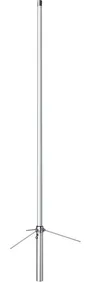
Japan · Est. & VerifiedTrusted name in amateur radio for decades. Accurate gain specs and pro-grade build quality that lasts decades outdoors. Their BC920 (6.5 dBi, ~$130) and SRH-series rubber ducks are popular in the LoRa community, with real-world RSSI to back the specs.
Smiley Antenna
US-made · VerifiedHand-tuned, US-made antennas with honest gain specs — a rarity in this market. Their "Mesh Static System" line is purpose-built for 915 MHz portable and fixed deployments and has a strong reputation in the MeshCore and APRS communities.
RF Explorer
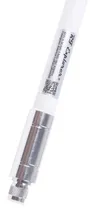
Professional · VerifiedProfessional-grade fiberglass antennas resold by SeeedStudio and RAK as a mark of quality. The RFELA-3/5X9 (5.8 dBi) and RFELA-5/8X9 (8 dBi) are highly consistent performers. Premium pricing reflects premium build.
RAKwireless / Rokland
LoRa-native · VerifiedLoRa-native manufacturer whose fiberglass antennas are designed specifically for 868/915 MHz. Their 5.8 dBi outdoor model is a popular value pick. Good option when buying alongside RAK hardware.
Laird Connectivity
Vehicle · VerifiedProfessional-grade vehicle antennas with a public-safety and commercial fleet pedigree. The TRAB9023N Phantom (3 dBi, NMO) requires no ground plane — recommended by experienced LoRa war-drivers for clean, permanent vehicle installs.
Taoglas
Industrial · ProHigh-quality embedded and external antennas with full S-parameter data published for every model. Often found in commercial LoRaWAN deployments. Strong in PCB/FPC and external fixed form factors; verify part numbers against the 902–928 MHz band before ordering.
Abracon
Embedded · ProProfessional embedded antennas with published data sheets and consistent QC. Strong in LoRaWAN gateway and compact terminal applications. Primarily PCB and adhesive-mount form factors; a good choice when integrating into a custom enclosure.
Generic / Amazon
⚠️ Verify carefullyFunctional budget options exist on Amazon , but quality varies enormously. Many are relabeled 868 MHz or 2.4 GHz designs. Stick to listings with many verified 915 MHz reviews. Any omni claiming more than 8 dBi in a small form factor is physically implausible — that's physics working against you.

IMPORTANT: Attach Antenna Before Power!
Always connect an antenna to your device before plugging in USB or turning it on. Even a few seconds of transmission without an antenna can permanently damage the LoRa radio chip.
Height Is Everything
LoRa operates at 915 MHz in largely line-of-sight propagation. The higher your antenna, the farther it can see over the horizon and clear obstructions. Even gaining a few feet of elevation can meaningfully extend range — this is why a rooftop antenna outperforms an identical one on a windowsill.
Common signal blockers (worst to least):
- Hills and terrain — The primary limiting factor in hilly areas like Vashon Island. A ridge directly between you and a node blocks the path entirely. No amount of antenna gain overcomes solid terrain.
- Buildings and structures — Concrete, metal framing, and modern insulated walls attenuate signals significantly. Urban environments are genuinely challenging without rooftop access.
- Dense, wet tree canopy — Foliage absorbs and scatters 915 MHz signals. Summer range in forested areas is noticeably shorter than winter. A clear hilltop matters more than a few extra dBi.
- Your own roof — An antenna in the attic loses 3–6 dB compared to one mounted above the roofline. Get it outside if at all possible.
LoRa's long-range capability only reveals itself with a clear path. A 5 dBi antenna on a 30-foot mast will consistently outperform an 8 dBi antenna tucked under an eave — height matters more than gain. Also note that even line-of-sight links have a practical limit due to Earth's curvature; beyond about 30–40 miles at low elevation, the horizon intervenes.
What Makes a Good Antenna?
The following technical guidance comes from our own expert, Nathan. These are the numbers that matter when evaluating a 915 MHz antenna — and why simple specs can be misleading.
🔵 SWR (Standing Wave Ratio)
SWR measures how well the antenna is matched to 50 ohms. Lower is better, but it does not need to be perfect:
- 1.2:1 — Excellent
- < 1.5:1 — Very good
- < 2:1 — Generally fine
- > 2:1 — Becomes a problem
- > 3:1 — Something is wrong
SWR only tells you about reflected power — not radiation efficiency. An inline SWR meter won't work for LoRa's short bursty transmissions; a VNA (Vector Network Analyzer) is needed for accurate measurement.
🟣 Gain (dBi) — What the number actually means
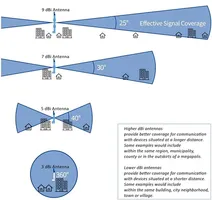
Gain reshapes the radiation pattern — it doesn't create power. Higher gain narrows the vertical beam, concentrating energy toward the horizon:
- 1–5 dBi — Good for most LoRa deployments; covers up-slope and down-slope terrain
- 8–9 dBi — Best for flat-terrain repeaters; creates dead zones directly above and below
In hilly terrain like Vashon Island, 3–5 dBi is often more practical than 8 dBi — the wider vertical beam reaches nodes at different elevations more reliably.
🟠 Efficiency — The spec no one advertises
Efficiency measures how much input power is actually radiated as RF versus lost as heat. An antenna can show excellent SWR and still be inefficient. Some cheap "high gain" antennas appear well-matched because their internal resistance absorbs the reflected power — that energy is being wasted as heat instead of going out as radio waves. A VNA or side-by-side RSSI comparison is the only way to catch this.
🟢 Testing with RSSI — The practical benchmark
The most practical antenna comparison uses real radios, not just a VNA.
+RSSI (Received Signal Strength Indication) is the signal strength in dBm (decibels relative to 1 milliwatt) of a received packet. The MeshCore app displays RSSI for received messages — look for the signal level shown alongside incoming packets or in the node status panel.
A useful quick-reference (for 915 MHz LoRa links):
- RSSI around -30 dBm — extremely strong
- RSSI around -70 dBm — strong link
- RSSI around -90 dBm — usually workable
- RSSI around -120 dBm — weak edge-of-coverage
- RSSI around -127 dBm — barely detectable
SNR (Signal-to-Noise Ratio) tells you if the signal is actually clear enough to decode through local noise. (Noise Floor is the background noise. For LoRa, values around -120 dBm are typical & represent very low noise.):
- +10 dB — excellent
- 0 dB — marginal but often decodable
- -10 dB — weak and noisy
- -20 dB — likely corrupted/unreliable
To compare antennas objectively:
- Set a second radio at a known fixed location with a stable antenna
- Note the RSSI shown in MeshCore for packets received with your current antenna
- Swap only the antenna — nothing else changes
-
Compare the new RSSI reading:
Every 3 dB improvement roughly doubles effective range!
To improve RSSI/SNR in the field: raise antenna height, keep the antenna vertical and unobstructed, use lower-loss coax and shorter cable runs, and move away from local interference sources (metal structures, routers, switching power supplies).
Also see: What is RSSI? (Wray Castle) and Understanding RSSI & SNR in APRS LoRa (hamradio.my).
🌀 Spreading Factor & Bandwidth Filters
Spreading Factor (SF) changes sensitivity, reliability, and airtime:
- SF7 — fastest data rate, shortest useful range
- SF9 — balanced speed and robustness
- SF12 — slowest, but most robust for weak/noisy links
Higher SF increases time-on-air, which can improve decode success when SNR is poor, but it also reduces channel capacity. Use the lowest SF that keeps links stable.
Bandpass filters can improve SNR when interference is the main issue (urban RF noise, nearby transmitters, overloaded front ends). They are most helpful when RSSI looks acceptable but packets are still corrupted or dropped.
- Use a filter tuned for your band (915 MHz in the US, 868 MHz in much of EU)
- For advanced stations, place filter first, then LNA, so you amplify cleaner RF
- If your problem is simply weak signal from poor placement, prioritize better antenna siting/height before adding RF front-end hardware
Practical rule: fix geometry first (height, line-of-sight, coax loss), then tune SF, then add filtering where noise is proven to be the bottleneck.
Installation Best Practices
Always waterproof your coax connections. Any exposed connector joint — where coax meets the antenna, a barrel connector, or a lightning arrestor — will wick moisture into the braid over time. Use high-quality self-amalgamating (self-fusing) silicone tape such as Proxicast , 3M Scotch 23 or Coax-Seal . Wrap the connector (??first in vinyl electrical tape, then apply/with???) the self-amalgamating tape in overlapping half-laps. Water in coax is invisible until your signal mysteriously disappears one rainy season.
Use Low-Loss Coaxial Cable
Coaxial cable has inherent signal loss — the longer the run, the more signal is lost before it reaches your radio. At 915 MHz, common cheap RG-58 loses roughly 1 dB per meter. For any run longer than a foot or two, choose a lower-loss cable:
- LMR-400 — The gold standard for permanent outdoor rooftop runs. ~0.22 dB/meter at 915 MHz. Stiff and thick, but the low loss is worth the handling effort for long runs.
- LMR-240 — More flexible, slightly higher loss (~0.5 dB/meter). A good compromise for shorter or indoor-to-outdoor runs where flexibility matters.
- RG-8X — A flexible mid-range option, though less consistent spec-to-spec than LMR types. Acceptable for shorter low-budget runs.
- Jumper pigtails — Keep these as short as possible. Every connector and adapter adds a small loss; they add up quickly.
For a complete guide to coax cable see this Wikipedia chart, or refer to this LoRa specific guide from Rokland: The initial letters are manufacturer brand names; LMR, RFC, and CFD are recommended. 240 & 400 refer to the thickness of the shielding in 1/100ths of an inch; or this comprehensive coax cable guide.
Disconnect outdoor antennas during electrical storms, or install a proper lightning arrestor inline with the coax at the point it enters the building. See lightning surge protectors and mount one outside at the building entry point, bonded to a grounding rod. Warning: verify connector gender and type before ordering (N vs SMA vs RP-SMA male/female) — see the sidebar connector reference. SMA & RP-SMA mate together, but do NOT transmit the signal!
Use the Times Microwave Attenuation Calculator to estimate signal loss for your specific cable type, length, and frequency.
What Range Can I Expect?
Range depends on many variables: antenna height, obstructions, LoRa spreading factor, local RF noise, and node density. That said, here are realistic expectations for typical Pacific Northwest conditions:
- Pocket tracker in a neighborhood: 0.5–2 miles to the nearest node or repeater, often less in dense urban areas.
- Car-mounted antenna, open rural terrain: 5–15 miles node-to-node under typical conditions.
- Home rooftop with 5–6 dBi antenna: 5–20 miles when there's a clear view across water, open farmland, or down a valley.
- Hilltop repeater with 8 dBi antenna: 50+ miles under good conditions. Documented links across Puget Sound and the Salish Sea regularly exceed 30–60 miles.
The most dramatic example in the region: Seattle-area "super repeaters" — nodes sited on high-elevation hilltops and towers with high-gain antennas and clear sightlines — have demonstrated single-hop links reaching well into eastern Washington and Oregon. Under exceptional conditions with mountain-top elevation and near-line-of-sight across the Cascades, contacts near Boise, Idaho have been reported. This is not typical operating range — it's what LoRa is capable of at its absolute best.
Antenna Interference & Co-Location
When two LoRa nodes are placed too close together on the same frequency, several problems arise:
- Receiver desensitization (desense): A nearby transmitter can overwhelm a radio's receiver front-end, making it deaf to weaker distant signals even when not actively transmitting. This is the most common co-location problem.
- Antenna coupling: Two antennas in close proximity inductively couple RF between them, distorting both radiation patterns and wasting transmit power into the neighboring radio rather than the air.
- Channel congestion: Two nodes too close together may generate excessive traffic between themselves, crowding out messages from more distant nodes that actually need the relay.
Rule of thumb: Keep co-located nodes at least 10 wavelengths apart — roughly 30 cm (12 inches) at 915 MHz as an absolute minimum, and ideally several meters or more. If two nodes are meant to relay traffic rather than talk directly, they should be far enough apart that their direct link is marginal; otherwise they just relay to each other endlessly.
📏 How severe is receiver desensitization?
At close range, the transmitting radio's signal leaks directly into the adjacent receiver's front-end (LNA), even on different frequencies. Most LoRa receivers have a maximum rated input around −5 to +5 dBm — an adjacent 100 mW (20 dBm) transmitter at 30 cm will arrive well above that threshold even after free-space path loss, saturating and desensing the receiver.
| Separation | Approx. coupling | Verdict |
|---|---|---|
| < 30 cm | −20 to −30 dBm | Severe desense — often deaf |
| 1 m | −40 to −50 dBm | Still problematic |
| 3–5 m | −55 to −65 dBm | Marginal / workable |
| 10+ m | −70 dBm+ | Generally safe |
For the dual-antenna hilltop strategy, the most practical fix is physical separation — mount the high-gain omni at the mast top and the low-gain whip at least 3 m lower or offset horizontally. Two radios in the same box 10 cm apart will noticeably hurt each other.
Gain Patterns & Terrain Planning
Higher gain doesn't make an antenna more powerful — it reshapes where the power goes. Each step up in dBi squashes the vertical radiation pattern into a flatter disc, pushing energy toward the horizon and away from steep angles above and below.
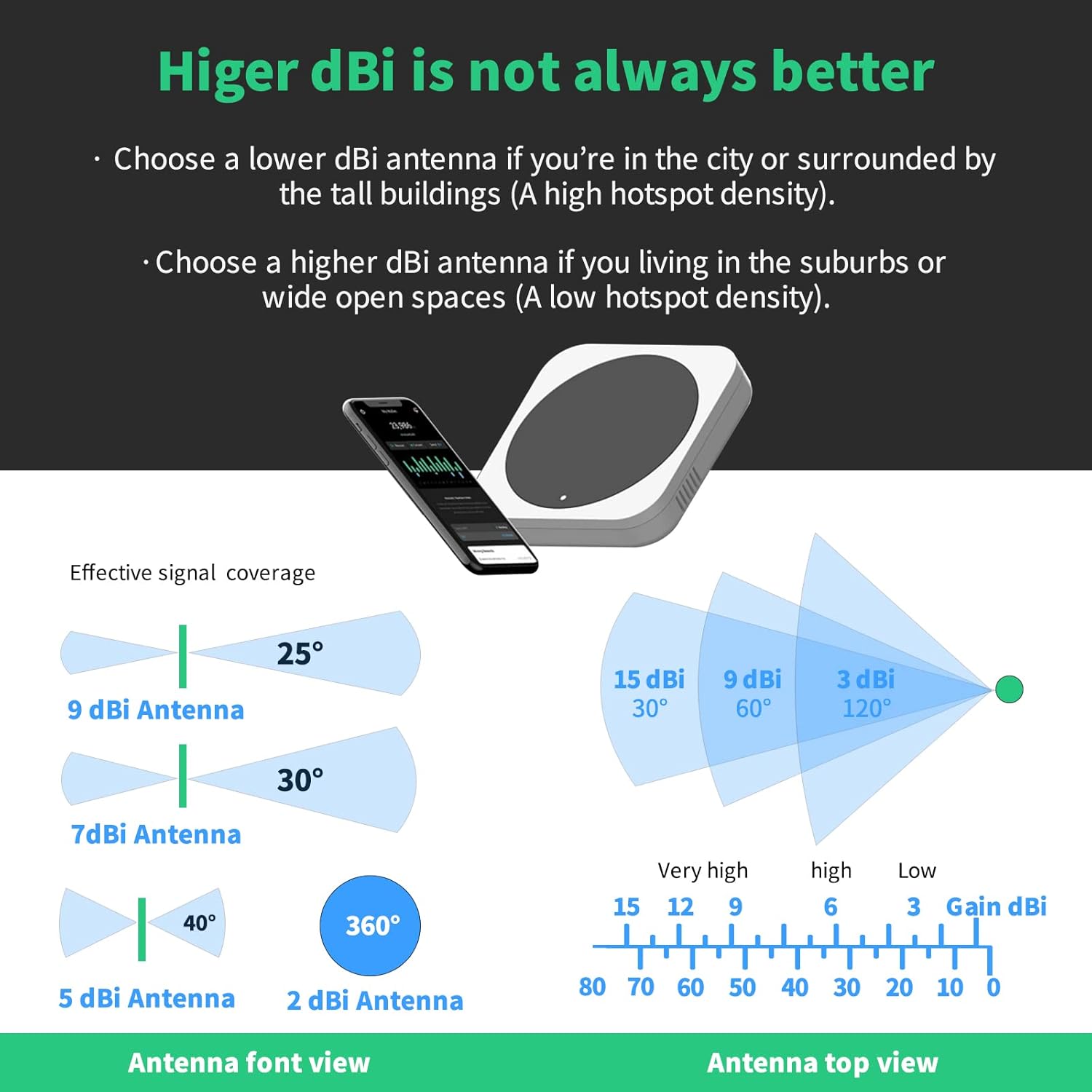
🏔️ Tiered Gain Strategy for Hilly Terrain (e.g. Vashon)
Vashon's ridgelines and valleys create natural mesh tiers. The most effective strategy pairs high-gain antennas on elevated repeater nodes with low-gain antennas on valley and neighborhood nodes:
Hilltop / Repeater Nodes — 5–8 dBi
Height does the work. A high-gain omni mounted on a ridge or rooftop sweeps the horizon efficiently, reaching other hilltops and distant valley nodes with minimal wasted energy.
Valley / Neighborhood Nodes — 2–3 dBi
Low gain means a wide vertical beam. A node in a valley looking up at a hilltop repeater needs that vertical coverage — a high-gain antenna on valley ground would beam right past the hilltop node overhead.
A pair of co-located antennas on the same node is also worth considering: a high-gain omni for long links to other hilltops, and a second low-gain whip on a short pigtail for reliable pickup of nearby neighborhood nodes. In practice, this is usually one antenna per radio: each LoRa radio has its own RF connector and feedline. Avoid passive splitters on a single radio port unless you are intentionally building a filtered RF combiner system, because splitters add loss and can reduce both transmit and receive performance.
If you want to explore this pattern further, start with Get a Radio for hardware options, the MeshCore Flasher to confirm supported targets, and the MeshCore FAQ for current platform guidance.
⚠️ When High Gain Hurts You
- Boats & kayaks — 10–15° of roll aims an 8 dBi antenna at the sky or the water. A 3 dBi whip barely notices.
- Backpacks & hip pockets — a tracker is rarely vertical. Wide vertical coverage forgives the tilt; a high-gain antenna punishes it.
- Valley floors near hills — nodes above you sit outside the flat beam. Use 2–3 dBi here.
🗺️ Plan Your Repeater Network
The UISP Design Center ↗ (by Ubiquiti) is a free browser-based tool that overlays terrain elevation data with line-of-sight calculations. Drop pins for each proposed repeater location and verify that nodes can actually see each other before buying hardware.
Antenna Types
LoRa antennas fall into a handful of common form factors, each suited to a different deployment scenario:
Spring / Whip
LoRa Spring Antenna
Compact helical wire spring. Small footprint makes it ideal for space-constrained LoRa nodes where a full-length antenna won't fit.
Embedded
PCB / FPC Antenna
Flat trace or flexible foil antenna embedded directly inside a device enclosure. Common in compact commercial terminals and integrations where an external connector is impractical.
Indoor / Desktop
Stub Antenna
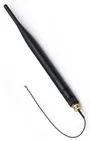
The familiar short flexible whip with an SMA connector. Adequate for benchtop testing and indoor nodes — a good starting point and easy to upgrade.
Indoor / Vehicle
Magnetic-Base Antenna
Magnet mount with coax pigtail. Sticks to any metal surface — roof of a car, metal cabinet, window sill. Great for temporary or portable deployments.
Outdoor / Gateway
Fiberglass Antenna
Full-size omnidirectional antenna in a sealed fiberglass radome. Best-in-class gain (typically 3–8 dBi), weather-resistant, and built for permanent outdoor or rooftop installs. The go-to choice for LoRaWAN gateways and fixed repeaters.
Point-to-Point / Special
Directional Antenna
Yagi, patch, or panel antennas that concentrate gain in one direction (typically 9–15+ dBi). Used for long-range point-to-point links across valleys, water, or large distances where a single focused beam outperforms any omnidirectional option. Requires careful alignment.
Still under construction — don't rely on specs or stars!
Antenna Reviews
Community-reviewed antennas for LoRa 915 MHz mesh networking. Click any antenna for detailed specs, performance notes, and purchase links.
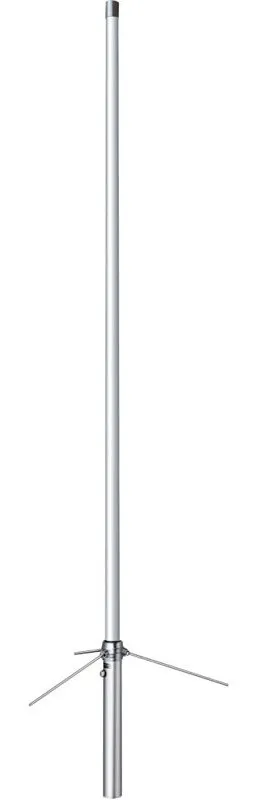
Diamond BC920
Diamond Antenna BC920 Base Station Antenna
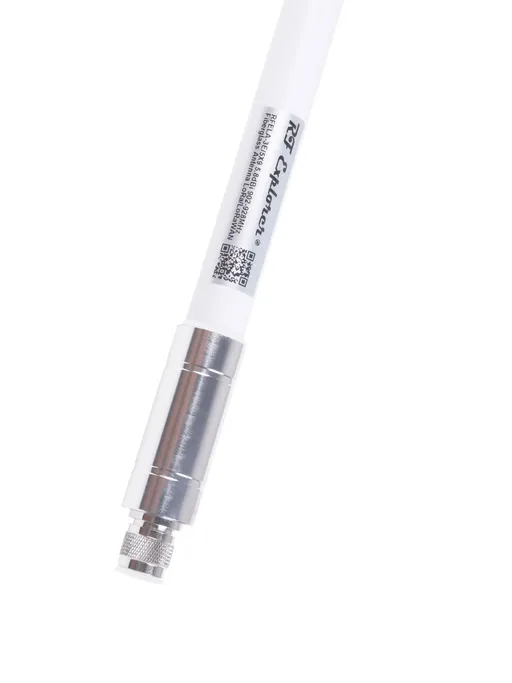
RFELA-5/8X9
RF Explorer 8dBi High Gain Fiberglass Antenna
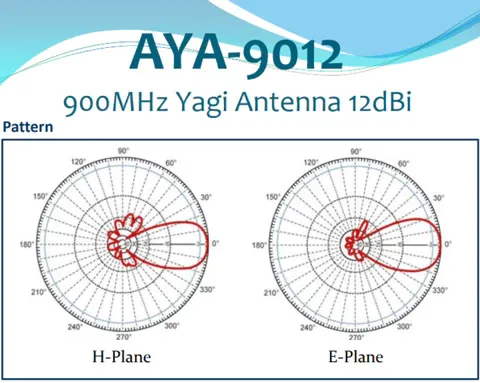
ALFA AYA-9012
ALFA Network AYA-9012 12dBi Directional Yagi 915MHz (N-Female)
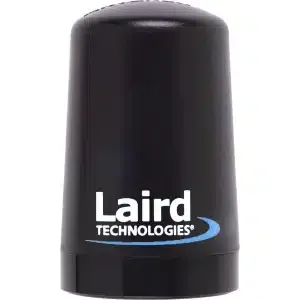
Laird Phantom
Laird TRAB9023N Low-Profile 902-928MHz NMO Car Antenna
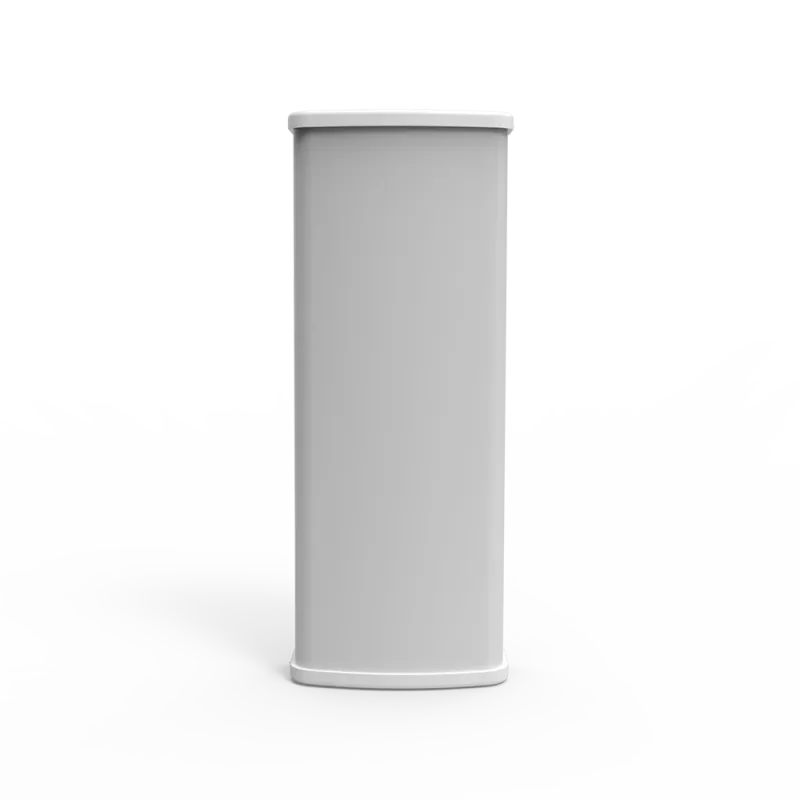
RAK 12dBi Directional
RAKwireless 12dBi Directional Antenna 860-930 MHz
RFELA-3/5X9
RF Explorer 5.8dBi Fiberglass Antenna
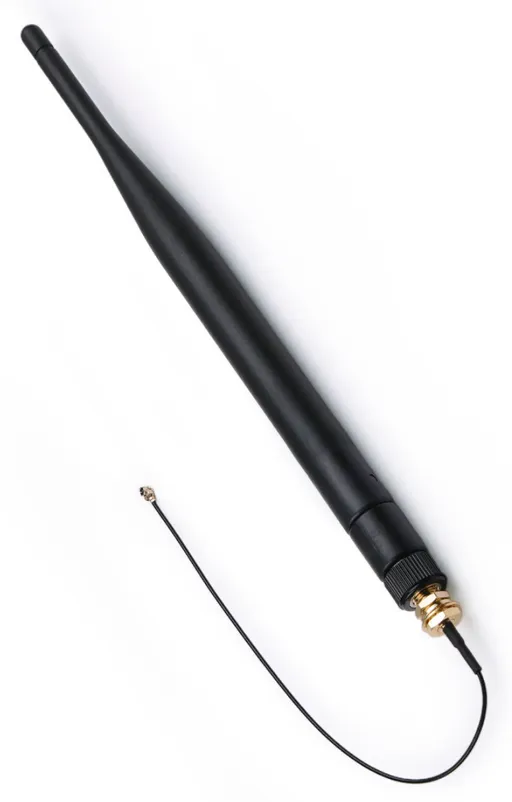
Diamond SRH915
Diamond SRH915 BNC/SMA Dual-Band Handheld Whip 915MHz
Diamond SRH915SB
Diamond SRH915SB SMA Handheld Whip Antenna 915MHz
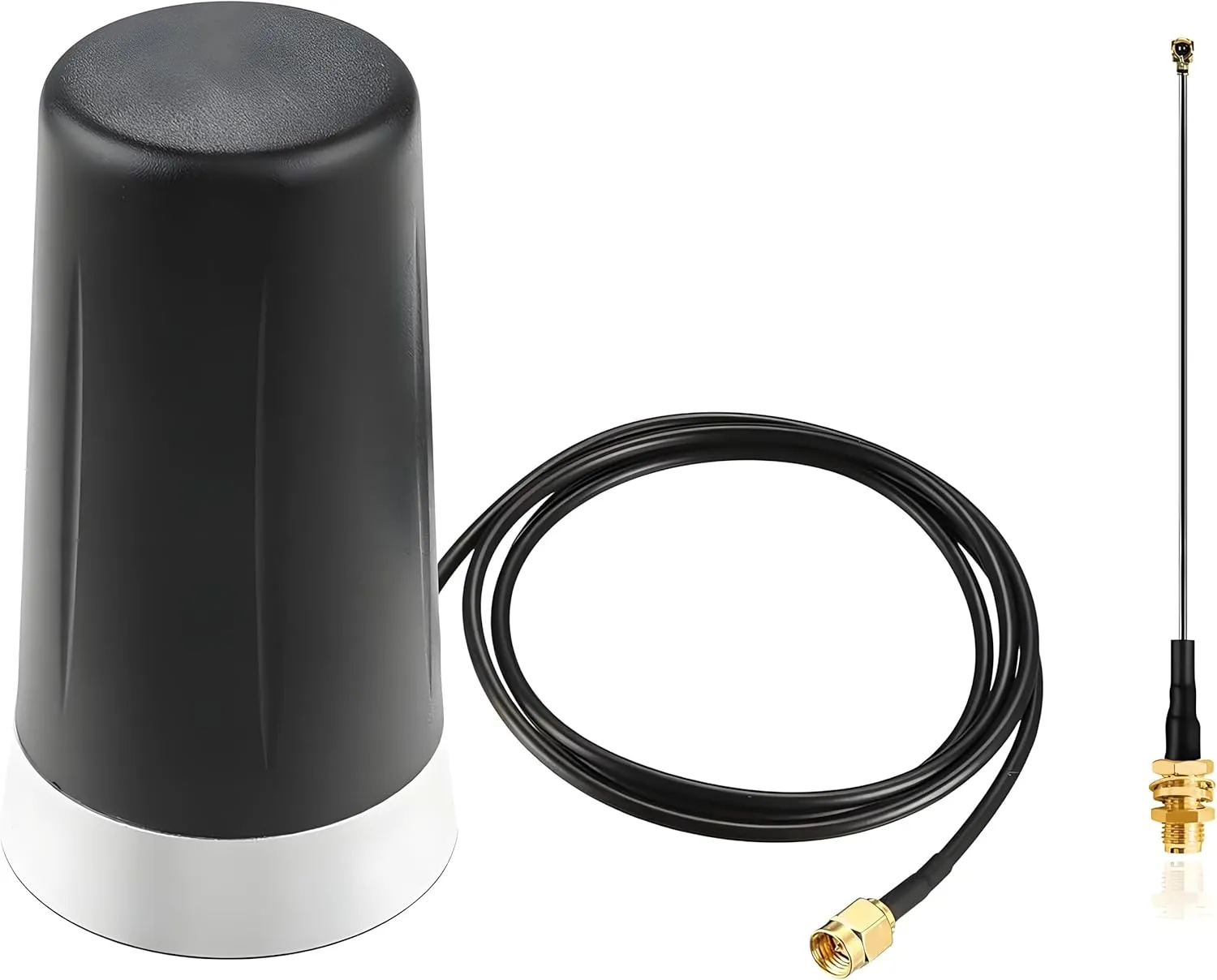
Magnetic Car Antenna
Slinksco 915MHz Magnetic Mount Car Antenna
RAK 9dBi Directional
RAKwireless 9dBi Directional Antenna 902-928 MHz
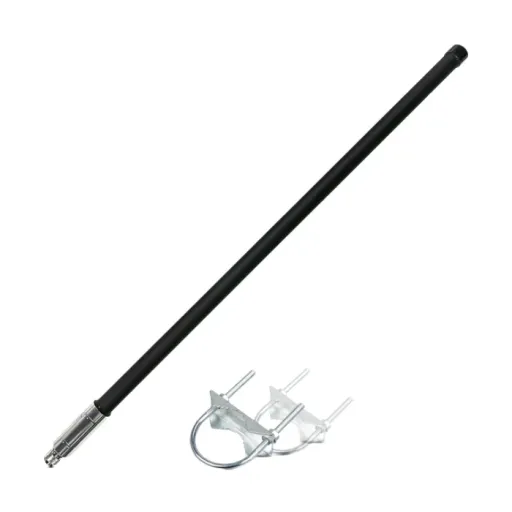
RAK 5.8dBi Outdoor
RAKwireless 5.8dBi Outdoor Fiberglass Antenna 868/915MHz

Smiley Mesh Antenna
Smiley Antenna MeshStatic 915MHz Antenna
RAK 3dBi Indoor
RAKwireless 3dBi Indoor Fiberglass Antenna 868/915MHz
Taoglas TI.92
Taoglas TI.92.2113 Wideband IoT Whip Antenna 868/915MHz
Taoglas FXP73 PCB
Taoglas FXP73.07.0100A Flexible PCB Antenna 868/915MHz
Abracon APAE915
Abracon APAE915R0830-T Ceramic Patch Antenna 915MHz
Stub
Generic Stub Antenna 915MHz