Mesh Networking Glossary
Definitions of terms, acronyms, and concepts used across VashonMesh — from radio physics to protocol architecture.
- 18650 Cell #
-
A standardized cylindrical Lithium-Ion battery cell (18 mm diameter × 65 mm long). Widely used in consumer electronics (laptops, flashlights) and in LoRa devices like the LilyGo T-Beam due to its high capacity (2,000–3,500 mAh), easy sourcing, and replaceability. Not included with most devices — must be purchased separately.
- AES128 — Advanced Encryption Standard, 128-bit key #
-
A symmetric block cipher standard widely used for fast, secure data encryption. MeshCore uses AES128 to encrypt message payloads: direct messages use a key derived via ECDH, while group/channel messages use a pre-shared symmetric key. AES128 provides strong security for embedded IoT devices with minimal computational overhead.
- APRS — Automatic Packet Reporting System #
-
An amateur radio protocol for real-time digital communication of position, weather data, and short messages over the AX.25 packet radio network (typically 144.390 MHz in North America). Licensed ham operators use APRS for vehicle tracking and weather station reporting. GPS-equipped LoRa devices (e.g., LilyGo T-Beam) can be configured as dual-mode nodes — APRS on VHF and MeshCore on 915 MHz simultaneously.
- AREDN — Amateur Radio Emergency Digital Network #
-
An open-source project that provides high-speed Wi-Fi mesh networking using amateur radio frequencies. AREDN networks are primarily used for emergency communications and are operated by licensed amateur radio operators.
- Beartooth #
-
A proprietary off-grid mesh radio system designed for peer-to-peer voice and text communication without cell towers. The Beartooth MK II supports real-time voice and data via a custom mesh protocol. Unlike LoRa-based systems, Beartooth is a closed, expensive (>$1,000/pair) turnkey solution. Standard LoRa devices ($40–$100) are open, low-cost, and ideal for text/data but cannot carry voice.
- BLE — Bluetooth Low Energy #
-
A power-optimized variant of Bluetooth (introduced in Bluetooth 4.0) designed for infrequent, short-burst data exchange with coin-cell-class power budgets. Distinct from Classic Bluetooth (audio, file transfer). In mesh networking, nRF52840-based LoRa devices use BLE to connect to smartphones running MeshCore or Meshtastic apps — the local phone-to-radio link, not the long-range mesh link.
- Bluetooth #
-
A short-range, 2.4 GHz UHF wireless standard used to connect devices (phones, computers, headphones) over distances of ~10–100 m. In the mesh networking context, Bluetooth is used to pair a LoRa radio to a smartphone running MeshCore or Meshtastic apps — it is the local link between your phone and the radio, not the long-range mesh link itself.
- BOM — Bill of Materials #
-
A complete list of components, parts, and quantities needed to build a device. In the mesh networking context, the BOM for a LoRa node typically includes a microcontroller (e.g., ESP32), a LoRa radio module, an antenna, a battery, and an enclosure.
- Bootloader #
-
A small program that runs first every time an MCU powers up or resets, similar to a PC BIOS. It briefly checks for an incoming firmware upload; if detected, it accepts and writes the new firmware. If no upload arrives within a short timeout, it hands off to the existing application. The device can be set into DFU (Device Firmware Update) mode at any time through special commands from WebUSB/Web Serial.
In practice, using WebUSB/Web Serial to manually start DFU mode is usually the simplest path because it is consistent between manufacturers. Start with the browser flasher pages first (MeshCore/Meshtastic), which use this API.
Manual bootloader button sequences are a fallback when auto-detection fails.
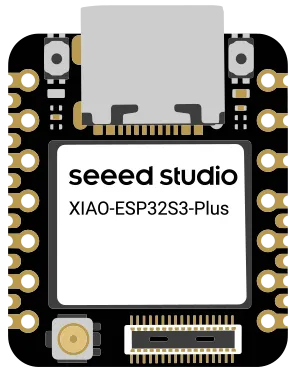
ESP32 / ESP32-S3 (fallback): Hold the BOOT (aka PROGRAM) button, tap RST, then release BOOT. The chip enters serial download mode and appears as a COM/serial port on your computer.
Alt technique (per Heltec): here are two methods to enter this mode:
- Hold down the PRG button, connect the USB-C cable, then release the PRG button.
- Connect the USB-C cable, hold down the PRG button, press the RST button once, then release the PRG button.
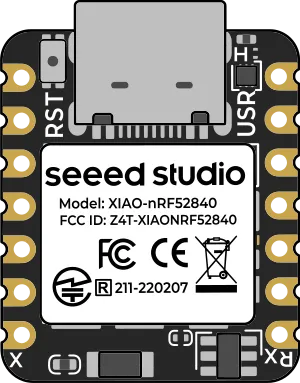
nRF52840 (RAK4631, Seeed Xiao nRF52840) (fallback): Quickly double-tap the RESET button. The device mounts as a USB mass-storage drive (e.g.
FTHR840BOOTorRAK4631), and new firmware can be dragged onto it as a.uf2file, or the MeshCore Flasher can target it via WebUSB (a JavaScript specification for securely providing access to USB devices from web applications). - Channel #
-
A named logical communication group within a mesh network. In MeshCore, channels can be public (prefixed with #, e.g., #vashon-maury) — accessible to anyone using the same name — or private (protected with a shared secret key). A device can be subscribed to up to 40 channels simultaneously.
- Community Firmware #
-
The standard, open-source MeshCore firmware that supports all four node roles: Companion, Repeater, Room Server, and Sensor. It is freely available via the MeshCore Flasher and is the baseline firmware for most devices. Source code is publicly maintained by the MeshCore community.
- Companion #
-
A client-only device role in MeshCore. Companions send and receive messages but never relay packets for other nodes — that job belongs to repeaters and room servers. This keeps battery consumption low and prevents the network from being overwhelmed by excessive re-broadcasting.
- COTS — Commercial Off-The-Shelf #
-
Pre-built hardware components available to buy from regular commercial sources rather than requiring custom manufacturing. COTS components — ESP32 boards, SX1276 LoRa modules, common enclosures — make building mesh nodes affordable and accessible.
- dBi — Decibel-isotropic #
-
A unit of antenna gain measured relative to a theoretical isotropic radiator (one that radiates equally in all directions). Higher dBi antennas focus energy into a flatter, more horizontal beam — useful for hilltop repeaters covering a wide area. Typical LoRa antennas range from ~2 dBi (rubber duck) to 8+ dBi (tall fiberglass mast). Gain comes from beam-narrowing, not extra power.
- dBm — Decibel-milliwatt #
-
A unit of absolute radio power measured relative to 1 milliwatt. Most LoRa devices transmit at +22 dBm (158 mW); high-power units reach +30 dBm (1 W). Every +3 dBm doubles the transmit power, which translates to roughly 1.4× range increase in free space. Receive sensitivity is also expressed in dBm — an SX1262 can decode signals as weak as −148 dBm.
- ECDH — Elliptic-Curve Diffie-Hellman #
-
A key exchange protocol that allows two parties to establish a shared secret over an insecure channel using elliptic-curve cryptography. MeshCore uses ECDH (specifically the x25519 curve) to derive per-session shared secrets between devices, which are then used with AES128 to encrypt direct messages end-to-end.
- ed25519 #
-
Edwards-curve Digital Signature Algorithm is a digital signature scheme using a variant of Schnorr signature based on twisted Edwards curves. An elliptic-curve digital signature algorithm used in MeshCore for device identity. Each MeshCore node generates an ed25519 keypair at setup. The public key serves as the device's identity on the network, while ECDH (Elliptic-curve Diffie-Hellman) derived from these keys provides per-message encryption.
- EMCOMM — Emergency Communications #
-
The use of radio — including mesh networking — for disaster response, public safety, and community resilience when conventional infrastructure (cell towers, internet) fails. A primary motivation for building the Vashon mesh network: establishing reliable, infrastructure-independent communications for island emergencies such as earthquakes, ferry disruptions, or extended power outages.
- ESP32 #
-
A low-cost, low-power microcontroller with integrated Wi-Fi and Bluetooth developed by Espressif. One of the most common platforms for LoRa mesh nodes — widely used in Meshtastic and MeshCore hardware due to its combination of processing power, connectivity, and sub-$5 cost.
- EUD — End User Device #
-
Any device operated by a person to communicate over the mesh network, as opposed to infrastructure nodes (repeaters, room servers) that exist solely to forward traffic. Smartphones running MeshCore or Meshtastic apps paired via Bluetooth to a LoRa radio are typical EUDs.
- Flood Routing #
-
A mesh routing strategy where every node rebroadcasts every message it receives. Simple and robust, but can overwhelm networks with many users. Meshtastic uses a form of flood routing (limited to 3–7 hops). Contrast with path-based routing used by MeshCore.
- GMRS — General Mobile Radio Service #
-
A licensed two-way radio service in the US operating in the 462/467 MHz UHF band. GMRS supports voice communication over short to moderate distances and allows repeater use to extend range. A single FCC license ($35, valid 10 years) covers an entire family. There is interest in deploying GMRS repeaters on Vashon for off-grid voice communication — well-developed commercial hardware, less experimental than LoRa, though shorter range.
- HaMPR / HaMMPR — Human-Attached Mesh Portable Radio #
-
A term describing a wearable or person-carried mesh radio node — typically a small LoRa device that a person carries in a pack or on their body as part of a tactical or emergency communications setup.
- Headless (Device) #
-
A device with no screen or keyboard UI — operated entirely via USB configuration, a connected companion radio, or remote management. MeshCore Repeater and Room Server firmware are typically run headless. Headless devices are lower cost, lower power, and well-suited to permanent infrastructure deployment.
- Hop #
-
Each time a message is retransmitted by an intermediate node (repeater or router) on its way to its destination, that counts as one hop. Meshtastic defaults to a 3-hop maximum (configurable to 7). MeshCore supports up to 64 hops, allowing messages to traverse large distances via relay chains.
- IP Rating — Ingress Protection Rating (IEC 60529) #
-
A two-digit standard code rating a device's resistance to solids and liquids. The first digit (0–6) indicates dust protection; the second (0–9) indicates water protection. IP67 means fully dustproof + withstands 30-minute submersion to 1 m — suitable for permanent outdoor deployment. IP65 = dustproof + protected against water jets.
- ISM Band — Industrial, Scientific and Medical Band #
-
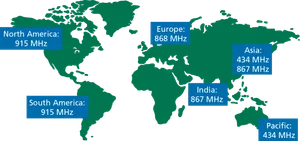
A set of radio frequency ranges reserved internationally for non-commercial use. LoRa operates in the ISM band — 902–928 MHz in North America (center 915 MHz), 863–870 MHz in Europe (868 MHz), and 920–923 MHz in Asia. No license is required to transmit, making LoRa widely accessible.
- Lightning Arrestor #
-
A device installed inline on an antenna feedline (between the outdoor antenna and the radio) that diverts lightning-induced voltage spikes to earth ground, protecting connected equipment. Strongly recommended — and sometimes insurance-required — for any permanently mounted outdoor antenna on rooftops, towers, or hilltop repeater sites.
- LiPo Battery — Lithium Polymer Battery #
-
A rechargeable battery in a flat, flexible pouch form factor connected via JST connector. Common in compact LoRa devices. LiPo cells have high energy density but require a built-in protection circuit to prevent overcharge and over-discharge. Typical capacities for mesh nodes range from 500 mAh (pocket-sized companion) to 10,000 mAh (solar+battery repeater).
- LNA — Low Noise Amplifier #
-
A receive-side RF amplifier that boosts weak incoming signals before they reach the radio chip, improving receive sensitivity. Some LoRa devices (e.g., Heltec V4) include an external LNA on the receive path. LNAs are characterised by their noise figure — a lower noise figure preserves more signal quality during amplification.
- LoRa — Long Range Radio #
-
A proprietary spread-spectrum modulation technique developed by Cycleo (acquired by Semtech in 2013). LoRa encodes data in chirp signals that can travel 2–10+ km at very low power on unlicensed ISM frequencies. The core physical layer technology underpinning Meshtastic, MeshCore, and LoRaWAN networks.
- LoRaWAN — Long Range Wide Area Network #
-
The industry-standard networking protocol built on top of LoRa radio technology, maintained by the LoRa Alliance. LoRaWAN is optimized for sending small sensor payloads from many field devices to centralized cloud servers — less suited to peer-to-peer mesh messaging than Meshtastic or MeshCore.
- MANET — Mobile Ad-hoc Network #
-
A self-configuring wireless network of mobile nodes with no fixed infrastructure (no base stations, no internet backbone). Each node can move freely and dynamically route traffic through other nodes. LoRa mesh networks are a form of MANET operating at low data rates over long ranges.
- MCU — Microcontroller Unit #
-
A compact integrated circuit that contains a processor core, memory, and programmable I/O peripherals on a single chip. MCUs run the firmware that controls a LoRa mesh node — handling packet encoding/decoding, routing logic, display, GPS, and Bluetooth. The two dominant MCU families in the MeshCore ecosystem are the ESP32 (Espressif) and nRF52840 (Nordic Semiconductor). ESP32 variants (ESP32, ESP32-S3) offer built-in WiFi alongside Bluetooth but draw more current in sleep/receive modes. The nRF52840 is optimized for ultra-low-power operation, making it the preferred choice for solar-powered nodes. Some devices also use the RP2040 (Raspberry Pi Foundation) or STM32 series.
- MeshCore #
-
A LoRa-based mesh networking firmware and protocol focused on security, scalability, and efficient routing. Key characteristics: path-based routing (not flood), role-based nodes (companions never repeat), ed25519 identity with per-message encryption, up to 64 hops, and support for up to 40 channels. Runs on ESP32, nRF52, RP2040, and STM32 hardware.
- MeshCore Flasher #
-
A browser-based firmware flashing tool at flasher.meshcore.dev and the recommended first path for most users. Connect a supported LoRa device via USB, select the target firmware (Community, Ripple, or MeshOS), and click Flash — no software installation required. Uses WebUSB/Web Serial in Chrome or Edge. If automatic detection does not work for your hardware, then use device-specific bootloader (MCU mode) steps as fallback.
- MeshMapper #
-
A coverage-mapping application for MeshCore networks. A companion radio is configured to run in mapping mode — it sends periodic pings while the user moves through an area with GPS active, logging which repeaters respond and at what signal strength. Results upload to a public map at meshmapper.net, building a community-sourced coverage heat map of the mesh.
- Meshtastic #
-
An open-source LoRa mesh networking project popular for outdoor and casual group use. Uses flood routing (every node rebroadcasts), a 240-character text message limit, and a 3-hop default (configurable to 7). Great for events and wilderness communication where the number of users is modest.
- MQTT — Message Queuing Telemetry Transport #
-
A lightweight publish-subscribe messaging protocol designed for constrained devices and low-bandwidth networks. In some mesh configurations, MQTT brokers bridge local mesh traffic to the internet, allowing messages to pass between geographically separate mesh islands.
- nRF52 #
-
A family of low-power Bluetooth and multi-protocol SoCs by Nordic Semiconductor. Several popular LoRa mesh hardware devices (RAK4631, Seeed WIO Tracker) use nRF52840 as their microcontroller alongside an SX1262 LoRa module. Commonly runs MeshCore firmware.
- OTA — Over-The-Air Update #
-
Delivering firmware or configuration updates to a device wirelessly — without physical access to the device. MeshCore supports OTA management of repeaters via a paired companion radio, which is critical for hilltop or rooftop installations where physical access is difficult or seasonal.
- Path-Based Routing #
-
A routing strategy where a node learns and caches the optimal path to reach a specific destination, then sends subsequent messages only along that path rather than broadcasting to all nodes. Used by MeshCore. Reduces network congestion compared to flood routing and enables the 64-hop range.
- Radio Chain #
-
The complete RF path for one radio: transceiver chip, matching/filter stage, connector, feedline, and antenna. In practical mesh installs, one radio chain uses one antenna port; running two antennas usually means using two separate radios/chains, not a passive splitter on one port.
- RadioLib #
-
An open-source universal wireless library for embedded microcontrollers (Arduino/ESP32/nRF52) that provides a unified API for dozens of radio chips — including the SX1262 and SX1276 used in LoRa mesh devices. Both MeshCore and Meshtastic use RadioLib to interface with the physical radio hardware, abstracting chip differences behind a common interface.
- Repeater #
-
A fixed-infrastructure node whose sole job is to receive and retransmit mesh messages to extend network range. In MeshCore, only repeaters (and room servers) forward packets — companions never do. A well-placed hilltop repeater can serve an entire island or valley. Typically solar-powered for off-grid deployment.
- Reticulum #
-
An open-source cryptography-based networking stack designed for reliable, encrypted communication over any medium — LoRa, Wi-Fi, the internet, packet radio, I2P, Tor, and more. Unlike Meshtastic or MeshCore, Reticulum is a protocol layer that can transparently interconnect heterogeneous networks. It requires a full computer (e.g., Raspberry Pi) to run the stack alongside a LoRa radio (typically running RNode firmware), which increases cost and power draw compared to simpler mesh devices.
- Ripple Firmware #
-
A premium MeshCore firmware variant developed by Scott Powell (RippleBiz) that enables a rich on-device touchscreen and keyboard user interface — allowing operation without a paired smartphone. Closed source and available via the MeshCore Flasher. Supported on select LilyGo and Elecrow devices with screens.
- RNode #
-
A LoRa transceiver firmware that turns a supported LoRa module into a general-purpose, open-source radio interface compatible with Reticulum and other tools. An RNode can act as a LoRa modem over a serial/USB connection to a host computer, enabling software like Reticulum to use LoRa as one of its physical link layers.
- Room Server #
-
A MeshCore infrastructure node that acts as both a repeater and a message-store. Room servers retain message history so that devices that join later can retrieve messages they missed. They can also create a local Wi-Fi access point, bridging mesh traffic to connected devices over Wi-Fi.
- RP2040 #
-
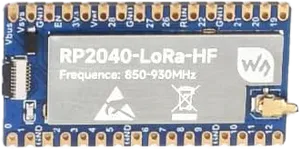
A dual-core ARM Cortex-M0+ microcontroller developed by Raspberry Pi. Used in some MeshCore-compatible hardware builds. Runs MeshCore firmware and is notable for its wide availability and low cost.
- RSSI — Received Signal Strength Indicator #
-
A negative-dBm value showing how strong a received radio packet was at the receiver. Closer to 0 is stronger: −80 dBm is excellent, −110 dBm is marginal, −130 dBm is near the noise floor. In the MeshCore app, RSSI is displayed per packet to show how well each node hears its neighbors.
- Satellite Messenger #
-
A portable, handheld device that enables two-way text messaging, GPS tracking, and SOS emergency alerts via global satellite networks (Iridium or Globalstar) rather than cell towers. Essential for backcountry, marine, or off-grid safety, these devices (e.g., Garmin inReach, SPOT, Zoleo) require a paid subscription to function — providing a critical communication link where no cell coverage exists. Unlike LoRa mesh networks, satellite messengers do not require local infrastructure, but do depend on commercial satellite services.
- Semtech #
-
The semiconductor company that owns the LoRa intellectual property and produces the SX1276/SX1262 family of LoRa radio chips. Semtech acquired Cycleo (the inventors of LoRa modulation) in 2013 and has since driven LoRa ecosystem development.
- Sensor (node role) #
-
A MeshCore firmware role that turns a device into a telemetry transmitter. Instead of facilitating two-way messaging, a Sensor node periodically broadcasts GPS coordinates, temperature, humidity, or other readings onto the mesh. Useful for tracking assets, monitoring remote weather stations, or building situational-awareness maps.
- Sigfox #
-
A low-power, low-bandwidth wide-area network (WAN) protocol launched in 2010 and acquired by UnaBiz in 2022. Often called '0G', Sigfox connects ~14 million IoT devices worldwide — primarily for sending small sensor payloads (e.g., utility meters) to the cloud. It is not designed for peer-to-peer or off-grid messaging.
- SMA Connector — Sub-Miniature version A #
-
A common RF coaxial connector used to attach antennas to LoRa radio modules. Most LoRa devices use either SMA or the smaller u.FL/IPEX connector. Using an appropriate antenna (not just the built-in PCB trace) dramatically improves range.
- SNR — Signal-to-Noise Ratio #
-
The ratio (in dB) of the desired signal strength to the background noise level. LoRa's chirp spread-spectrum modulation can decode signals at negative SNR values (e.g., −15 dB to −20 dB), meaning the signal can be weaker than the noise and still be received — a key reason LoRa achieves multi-kilometer range at low power. Higher SNR (e.g., +10 dB) indicates a clean, strong link.
- Spread Spectrum #
-
A radio transmission technique that deliberately spreads the signal across a wider frequency band than strictly necessary for the data rate. LoRa uses chirp spread spectrum (CSS), which makes signals highly resistant to interference and enables the long-range, low-power characteristics LoRa is known for.
- STM32 #
-
A large family of 32-bit ARM Cortex-M microcontrollers from STMicroelectronics, spanning ultra-low-power variants (STM32L0/L4) to high-performance cores (STM32H7). MeshCore supports STM32-based hardware in its HAL, and some experimental LoRa nodes use STM32 alongside SX1262 modules.
- SX1262 / SX1276 #
-
Semtech's LoRa radio chipsets. The older SX1276 (up to +20 dBm output) is found in many first-generation devices; the newer SX1262 (up to +22 dBm, lower receive current) is standard on modern hardware. Both are the hardware heart of nearly every LoRa mesh node.
- Telemetry #
-
Automated, one-way transmission of sensor readings — GPS position, temperature, battery voltage, signal strength — from remote devices over the mesh. MeshCore Sensor nodes are designed for this role. Telemetry data can be displayed in the app or collected by a Room Server for logging.
- U.FL / IPEX Connector #
-
A tiny snap-on RF coaxial connector (1.6 mm × 2 mm) used on compact LoRa boards where a full-size SMA connector won't fit — common on Heltec, RAK, and Seeed modules. A short pigtail cable (U.FL to SMA) adapts the board to standard external antennas. Handle with care: U.FL connectors are rated for approximately 30 insertion cycles.
- WarDriving #
-
Driving, biking, hiking, or sailing through an area with a mesh radio running MeshMapper, automatically logging GPS position alongside which repeaters are heard and at what signal strength. The resulting data builds a community coverage map of the mesh. The name derives from early 2000s Wi-Fi network scanning from vehicles, adapted here for LoRa coverage surveys.
- Web Serial API #
-
A browser API (supported in Chrome and Edge) that allows web pages to communicate directly with serial-port devices over USB. Used by the MeshCore Flasher and Meshtastic Flasher to write firmware to LoRa radios without requiring a desktop application. For most users, this browser-based flow is the easiest way to flash. Not available in Firefox or Safari.
- Wi-Fi HaLow™ #
-
The Wi-Fi Alliance designation for IEEE 802.11ah — a sub-1 GHz variant of Wi-Fi designed for IoT and long-range sensor networks. Operating below 1 GHz gives it better wall penetration and range (~1 km+) than standard 2.4 GHz Wi-Fi. Data rates range from 150 Kbps to 15 Mbps+. Compared to LoRaWAN, HaLow is faster but consumes more power and has shorter range (10 km+ for LoRa vs ~1 km for HaLow).
- WiMAX — Worldwide Interoperability for Microwave Access #
-
A wireless broadband standard (IEEE 802.16) designed to deliver high-speed internet over distances up to 50 km — far greater than Wi-Fi's ~30 m indoor range. WiMAX was positioned as a last-mile broadband solution before LTE/4G overtook it commercially.
- Zigbee #
-
A low-power, IEEE 802.15.4-based mesh networking standard optimized for short-range (10–100 m), high-density device networks — primarily smart home automation (lights, thermostats, sensors). Unlike LoRa, Zigbee is not designed for long-range communication; its strength is reliable, self-healing mesh coordination among many nearby devices.
No terms match your filter.
pnpm build). In-page filtering works in all modes.