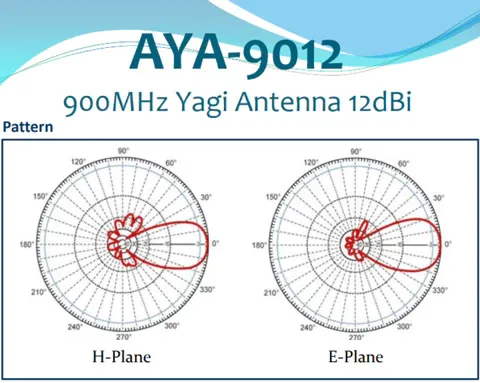
Specifications
- Gain
- 9dBi
- Size
- ~400mm length
- Price Range
- $30-50
Pros & Cons
Pros
- ✓ High gain concentrates signal along a single axis — excellent for long-range links
- ✓ Ideal for bridging across water, valleys, or open land where omnis fall short
- ✓ RAKwireless LoRa-native design — tuned specifically for 902–928 MHz
- ✓ N-type connector — pairs cleanly with LMR-400 for low-loss runs
- ✓ Weather-resistant construction suitable for permanent outdoor mounting
Cons
- ✗ Requires precise aiming — small misalignment loses most of the gain benefit
- ✗ Only serves nodes in the beam direction — not a mesh hub antenna
- ✗ Needs a sturdy, vibration-free mount (pole or wall bracket) to hold alignment
- ✗ Overkill for typical neighborhood mesh use — best for purpose-built long links
Where to Buy
RAKwireless 9dBi Directional Antenna
Overview
The RAKwireless 9dBi directional antenna is designed for long-range, point-to-point LoRa links at 902–928 MHz. Where an omnidirectional antenna spreads gain in all directions equally, a directional antenna concentrates it into a focused beam — trading coverage area for dramatically extended reach in one direction.
This is a special-purpose antenna. For most nodes in a neighborhood mesh, a fiberglass omni is the right tool. But when you need to bridge a ridgeline, cross Puget Sound, or reach an isolated node several miles away, a directional antenna on both ends of the link can make a connection that would otherwise be impossible.
When to Use a Directional Antenna
- Long point-to-point links — spanning valleys, water crossings, or open terrain
- Isolated node coverage — reaching a single remote location that’s too far for an omni
- Interference rejection — the narrow beam also rejects signals from other directions, which can help in RF-noisy environments
- Gateway-to-gateway backbone links — connecting two fixed infrastructure nodes across a long gap
When NOT to Use a Directional Antenna
- General mesh nodes that need to reach neighbors in multiple directions
- Mobile or portable use — directionals require fixed, precise alignment
- Indoor installations — the narrow beam is wasted
Installation Notes
Mount on a solid pole or wall bracket. Use a compass bearing and, ideally, a line-of-sight check on a map (Radio Mobile or HeyWhatsThat.com) before committing to a permanent install. Small angular errors (5–10°) can cost several dB at the far end. Point-to-point links work best when both ends use matched directional antennas aimed at each other.
Use LMR-400 coax for any run longer than a few feet — the high gain is easily eaten by cable loss on cheap coax.