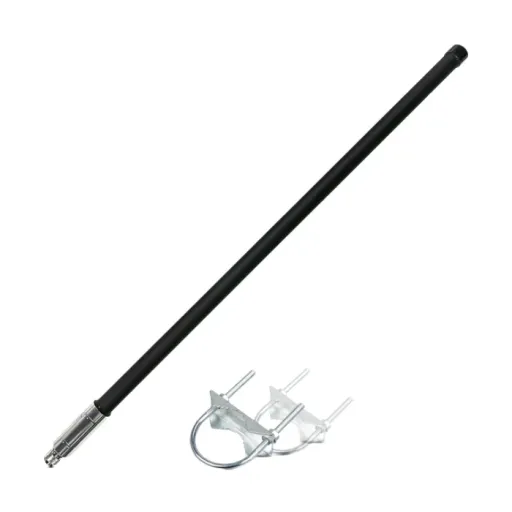
Specifications
- Gain
- 5.8dBi
- Size
- Approximately 860mm length
- Price Range
- $25-40
Pros & Cons
Pros
- ✓ Good value for a fiberglass outdoor antenna
- ✓ Covers both 868MHz (EU) and 915MHz (US) bands
- ✓ Weather-resistant fiberglass construction
- ✓ N-female base connector — low-loss connection standard
- ✓ Popular choice with broad community familiarity
- ✓ Available through Rokland with US-based shipping
Cons
- ✗ N-to-SMA adapter needed for most LoRa devices (adds cost and a connection point)
- ✗ Quality control slightly less consistent than RF Explorer or Diamond
- ✗ Originally marketed for Helium hotspots — same hardware but LoRa use is identical
Where to Buy
RAKwireless 5.8dBi Outdoor Antenna
Overview
The RAKwireless 5.8 dBi outdoor fiberglass antenna is a solid mid-range choice for permanent LoRa node installations. Originally popularized by the Helium network (which also operates at 915 MHz in the US), the same antenna works identically well for LoRa mesh networking. It’s one of the most widely deployed outdoor LoRa antennas in North America.
Features
- Dual-band compatible — 868 MHz (Europe) and 915 MHz (US) in one antenna
- Fiberglass radome — UV-resistant, handles rain, snow, and extended outdoor exposure
- N-female connector at the base — the N connector standard is preferred for outdoor use because it seals better than SMA and has lower contact resistance
- Omnidirectional — 360-degree horizontal coverage
N Connector Note
This antenna uses an N-female connector at the feed point. Most LoRa devices (T-Beam, Heltec, RAK WisBlock, etc.) use SMA or RP-SMA. You’ll need:
- An N-male to SMA-male pigtail adapter for direct connection, or
- An LMR-400 N-male terminated run from the rooftop mount down to the device
Keep any adapter or pigtail as short as practical to minimize losses.
Performance Notes
At 5.8 dBi, this antenna provides a significant step up from portable whips and rubber ducks while maintaining a usable vertical beamwidth for hilly terrain. It’s a strong general-purpose choice for home base nodes and small repeater installations. For comparison, the RF Explorer antennas at the same gain spec offer slightly more consistent tuning, but the RAK unit is easier to source domestically at a lower price point.