System for Repeater Names
Who is who, and whats their QTH!
Repeater Naming Strategy
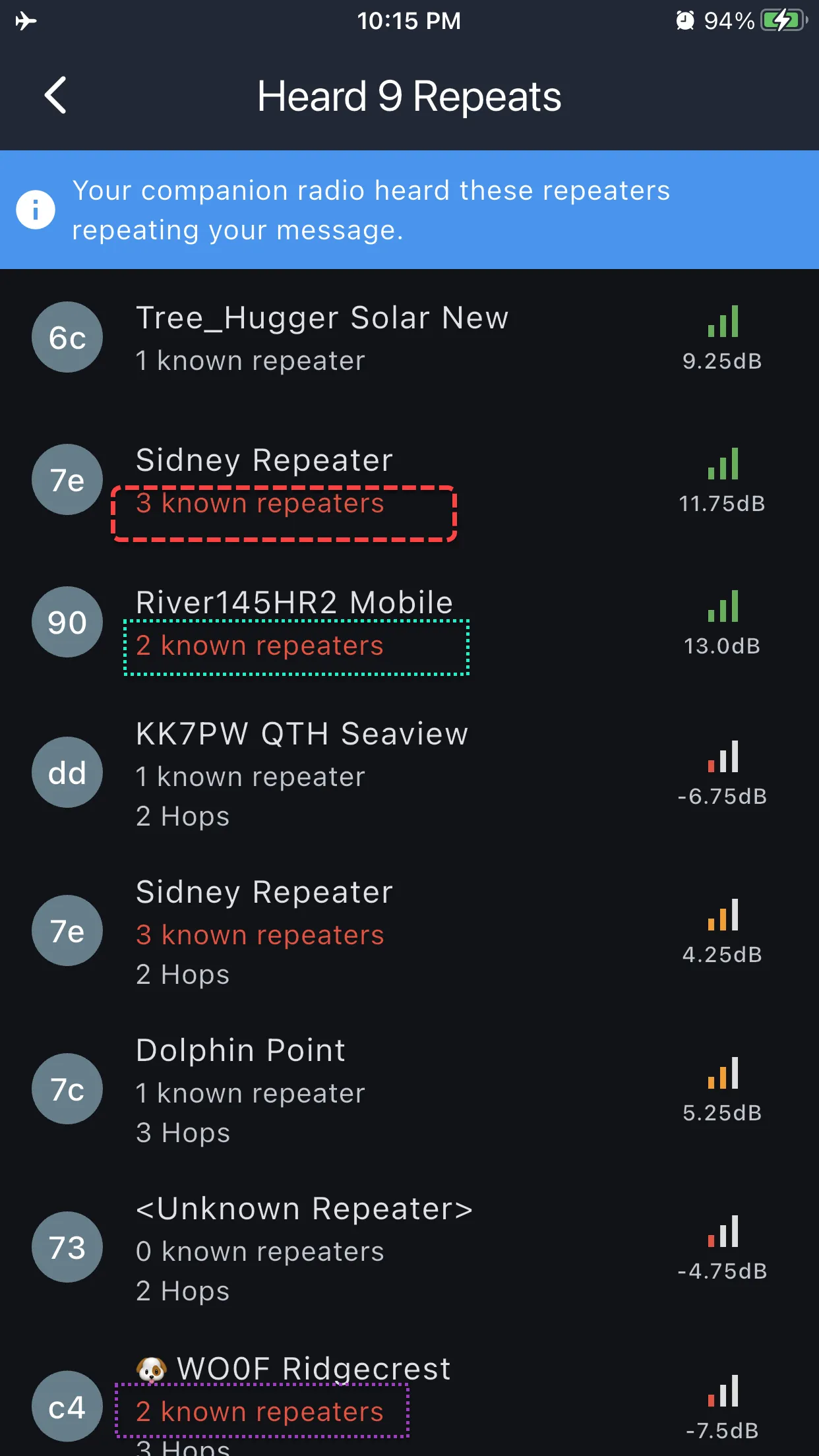
I’ve adopted a naming strategy for my repeaters that identifies the location and the two character prefix because of the numerous cases of 3, 4 and 5 repeaters sharing the same prefix. Remembering where 1K+ repeaters are located is a formidable task and needs some simplification.
Here’s what I use, as an example:
- WS90 SolsticePark Solar
- WS75 SW37th & Dakota SW
The first two characters could be WS, ES, NS, SS for the general geographical area of Seattle. The next is the two character prefix and there are 18 characters left in the name field for a more definitive location with the nearest intersection being a good choice as that will enable others to find you on a map easily.
Rational & Need
As we will depend on each others’ repeaters to deliver our text messages, something like this will be helpful for remembering all the local repeaters in your club’s area of operation. “VM” would work very easily for your location.
I understand that over 30% of messages today are “flood”, and that creates congestion on the net. We need to work for defined paths for our important contacts if this system is to work in an emergency situation (i.e., a sustained loss of electrical power for the region).
Too often now, I ask for the path, the Bot will reply back “two repeaters share the same prefix and which one it is can not be determined”. Now if you research and find one is in Canada and the other is in your local area you can figure that one out yourself. However, if two or three are within 10 miles of each other it is not so easy. Up on Capitol Hill and Beacon Hill the number of repeaters is really dense.
Still with the low cost repeaters which have low electrical demands this is an interesting alternative to explore. For VMI it is a great technology. For W7AW (West Seattle Radio Club), we have dues paying members in far north metro Seattle all the way south to Kent and Spanaway and from the Puget Sound to Lake Sammamish it is much more problematic. A few of our members have turned to Starlink, which has the equipment costs plus the roughly $80 to $100 monthly fee.
Alan Dieringer is a member/president of the West Seattle ARC which has 100 dues paying members scattered all over Seattle and few in areas like Bellevue, Lake Sammamish, Burien, Spanaway, etc.. For now as a group we can connect on MeshCore by using #seattle, #W7AW, etc..